Buy olivie.eu ?
We are moving the project
olivie.eu .
Are you interested in purchasing the domain
olivie.eu ?
domain@kv-gmbh.de · 0541-91531010
Buy olivie.eu ?
What are endergonic and exergonic reactions?
Endergonic reactions are chemical reactions that require an input of energy to proceed, resulting in products with higher energy content than the reactants. In contrast, exergonic reactions release energy as they proceed, with the products having lower energy content than the reactants. Endergonic reactions are non-spontaneous and require an external source of energy, while exergonic reactions are spontaneous and release energy, often in the form of heat. **
What are exergonic and endergonic reactions?
Exergonic reactions release energy, usually in the form of heat, and are spontaneous. These reactions involve the breakdown of complex molecules into simpler ones, such as the process of cellular respiration. Endergonic reactions, on the other hand, require an input of energy and are non-spontaneous. These reactions involve the synthesis of complex molecules from simpler ones, such as the process of photosynthesis. Both types of reactions play crucial roles in the energy metabolism of living organisms. **


Similar search terms for Exergonic
Top-Angebote
Products related to Exergonic:
-
Naturcid Organic Chopped Nora Gourmet BC 75 grNutrition and Supplements Sauces and Condiments Naturcid Organic Chopped Nora Gourmet BC 75 gr Very hot pepper that is used dry to season. The ñora is a cultivated variety of Capsicum annuum or pepper, called "ball" in Alicante and Murcia, where it became popular, small in size, round in shape and red when ripe, which is left to dry in the sun. How to use: Culinary use. Season to taste. No allergens Does not contain genetically modified organisms (No GMO) or irradiated. BPA free container. Store at room temperature, in a cool, dry place protected from light.3,73 £*Shipping: 3,99 £Secure redirect to the provider




-
What is exergonic and endergonic in chemistry?
In chemistry, exergonic and endergonic refer to the energy changes that occur during chemical reactions. An exergonic reaction releases energy, usually in the form of heat, and is spontaneous. On the other hand, an endergonic reaction requires an input of energy to proceed and is non-spontaneous. Exergonic and endergonic reactions are important concepts in understanding the thermodynamics of chemical reactions and the direction in which they occur. **
-
What is the difference between exergonic and exothermic reactions?
Exergonic and exothermic reactions are both types of reactions that release energy, but they occur in different contexts. Exergonic reactions refer to chemical reactions that release energy, typically in the form of ATP, while exothermic reactions specifically refer to reactions that release heat. Exergonic reactions can include both exothermic and endothermic reactions, as long as they release energy overall. In contrast, exothermic reactions always involve the release of heat. **
-
How can one calculate the temperature at which an exergonic reaction occurs?
To calculate the temperature at which an exergonic reaction occurs, one can use the Gibbs free energy equation: ΔG = ΔH - TΔS. Here, ΔG is the change in Gibbs free energy, ΔH is the change in enthalpy, T is the temperature in Kelvin, and ΔS is the change in entropy. By rearranging the equation to solve for T, one can determine the temperature at which the reaction becomes exergonic (ΔG < 0). This calculation helps in understanding the conditions under which a reaction will proceed spontaneously. **
-
What are examples of exergonic and endergonic reactions using ATP as an example?
An example of an exergonic reaction using ATP is the hydrolysis of ATP to ADP and inorganic phosphate. This reaction releases energy that can be used to drive cellular processes such as muscle contraction or active transport. An example of an endergonic reaction using ATP is the synthesis of ATP from ADP and inorganic phosphate, which requires energy input, typically from processes like cellular respiration or photosynthesis. In both cases, ATP serves as a key energy carrier in the cell, facilitating the transfer of energy from exergonic to endergonic reactions. **

How can one explain the terms exothermic, endothermic, exergonic, endergonic, reaction enthalpy, and entropy?
Exothermic reactions release heat energy to the surroundings, while endothermic reactions absorb heat energy from the surroundings. Exergonic reactions release energy, usually in the form of heat, while endergonic reactions require an input of energy to proceed. Reaction enthalpy is the total heat content of a system at constant pressure, which can be positive (endothermic) or negative (exothermic). Entropy is a measure of the disorder or randomness of a system, with reactions tending to increase entropy over time. **
What are the functions of enzymes in metabolism, for example in exergonic and endergonic reactions?
Enzymes play a crucial role in metabolism by speeding up chemical reactions. In exergonic reactions, enzymes help break down molecules and release energy by lowering the activation energy required for the reaction to occur. This allows the reaction to happen more quickly and efficiently. In endergonic reactions, enzymes facilitate the synthesis of new molecules by bringing together the necessary substrates and lowering the energy barrier for the reaction to take place. Overall, enzymes in metabolism help regulate the flow of energy and materials within cells, allowing for the efficient production and utilization of energy. **
Top-Angebote
Products related to Exergonic:
-
IsolaBio Organic Rice Cooking Cream 200 mlNutrition and Supplements Sauces and Condiments IsolaBio Organic Rice Cooking Cream 200 ml Made from the quintessential grain using our flavor-focused production method, this plant-based, gluten-free culinary complement adds a delicious touch to both first courses and desserts. Its creamy perfection and smooth texture make it a must-have in your kitchen. It's excellent for creating savory dishes, sweet decorations, and creative sauces: you decide which recipe you want to elevate with the lightness and organic flavor that are our hallmark. Size: 200 ml.1,50 £*Shipping: 3,99 £Secure redirect to the provider
-
IsolaBio Organic Cooking Cream 200 ml OatyNutrition and Supplements Sauces and Condiments IsolaBio Organic Cooking Cream 200 ml Oaty Made from the organic oats we passionately cultivate in our Italian land, we present our tasty and nutritious oat cooking cream, the ideal addition to your dishes that will make a creamy difference. Discover all the creative options it can offer, adding that subtle yet distinctive touch that will win you over. It can be enjoyed in more classic recipes, savory dishes, and last but not least, in summer salads. Add it in small doses to give your dishes an unbeatable flavor. Organic, Vegan.1,48 £*Shipping: 3,99 £Secure redirect to the provider
-
Naturcid Organic Chopped Nora Gourmet BC 75 grNutrition and Supplements Sauces and Condiments Naturcid Organic Chopped Nora Gourmet BC 75 gr Very hot pepper that is used dry to season. The ñora is a cultivated variety of Capsicum annuum or pepper, called "ball" in Alicante and Murcia, where it became popular, small in size, round in shape and red when ripe, which is left to dry in the sun. How to use: Culinary use. Season to taste. No allergens Does not contain genetically modified organisms (No GMO) or irradiated. BPA free container. Store at room temperature, in a cool, dry place protected from light.3,73 £*Shipping: 3,99 £Secure redirect to the provider
-
What are endergonic and exergonic reactions?
Endergonic reactions are chemical reactions that require an input of energy to proceed, resulting in products with higher energy content than the reactants. In contrast, exergonic reactions release energy as they proceed, with the products having lower energy content than the reactants. Endergonic reactions are non-spontaneous and require an external source of energy, while exergonic reactions are spontaneous and release energy, often in the form of heat. **
-
What are exergonic and endergonic reactions?
Exergonic reactions release energy, usually in the form of heat, and are spontaneous. These reactions involve the breakdown of complex molecules into simpler ones, such as the process of cellular respiration. Endergonic reactions, on the other hand, require an input of energy and are non-spontaneous. These reactions involve the synthesis of complex molecules from simpler ones, such as the process of photosynthesis. Both types of reactions play crucial roles in the energy metabolism of living organisms. **
-
What is exergonic and endergonic in chemistry?
In chemistry, exergonic and endergonic refer to the energy changes that occur during chemical reactions. An exergonic reaction releases energy, usually in the form of heat, and is spontaneous. On the other hand, an endergonic reaction requires an input of energy to proceed and is non-spontaneous. Exergonic and endergonic reactions are important concepts in understanding the thermodynamics of chemical reactions and the direction in which they occur. **
-
What is the difference between exergonic and exothermic reactions?
Exergonic and exothermic reactions are both types of reactions that release energy, but they occur in different contexts. Exergonic reactions refer to chemical reactions that release energy, typically in the form of ATP, while exothermic reactions specifically refer to reactions that release heat. Exergonic reactions can include both exothermic and endothermic reactions, as long as they release energy overall. In contrast, exothermic reactions always involve the release of heat. **
Similar search terms for Exergonic
-
Royal Gourmet 1500W Portable Electric Grill for Outdoor Cooking, Adjustable Temperature Control, Gray & BlackWith its smart temperature control system and modern aesthetics, the Royal Gourmet® DL1002 Portable Electric Grill takes your outdoor cooking to the next level.149,99 $*Shipping: 0,00 $Secure redirect to the provider
-
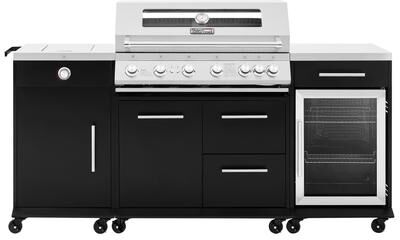
Royal Gourmet Outdoor Kitchen Gas Grill with Versatile Side Burner and Refrigerator, Backyard CookingProduct Features: 1. Powerful 96,000 BTU Cooking System: Six main burners deliver 12,000 BTU each, while a 12,000 BTU infrared rear burner and ...2099,99 $*Shipping: 0,00 $Secure redirect to the provider
-
How can one calculate the temperature at which an exergonic reaction occurs?
To calculate the temperature at which an exergonic reaction occurs, one can use the Gibbs free energy equation: ΔG = ΔH - TΔS. Here, ΔG is the change in Gibbs free energy, ΔH is the change in enthalpy, T is the temperature in Kelvin, and ΔS is the change in entropy. By rearranging the equation to solve for T, one can determine the temperature at which the reaction becomes exergonic (ΔG < 0). This calculation helps in understanding the conditions under which a reaction will proceed spontaneously. **
-
What are examples of exergonic and endergonic reactions using ATP as an example?
An example of an exergonic reaction using ATP is the hydrolysis of ATP to ADP and inorganic phosphate. This reaction releases energy that can be used to drive cellular processes such as muscle contraction or active transport. An example of an endergonic reaction using ATP is the synthesis of ATP from ADP and inorganic phosphate, which requires energy input, typically from processes like cellular respiration or photosynthesis. In both cases, ATP serves as a key energy carrier in the cell, facilitating the transfer of energy from exergonic to endergonic reactions. **
-
How can one explain the terms exothermic, endothermic, exergonic, endergonic, reaction enthalpy, and entropy?
Exothermic reactions release heat energy to the surroundings, while endothermic reactions absorb heat energy from the surroundings. Exergonic reactions release energy, usually in the form of heat, while endergonic reactions require an input of energy to proceed. Reaction enthalpy is the total heat content of a system at constant pressure, which can be positive (endothermic) or negative (exothermic). Entropy is a measure of the disorder or randomness of a system, with reactions tending to increase entropy over time. **
-
What are the functions of enzymes in metabolism, for example in exergonic and endergonic reactions?
Enzymes play a crucial role in metabolism by speeding up chemical reactions. In exergonic reactions, enzymes help break down molecules and release energy by lowering the activation energy required for the reaction to occur. This allows the reaction to happen more quickly and efficiently. In endergonic reactions, enzymes facilitate the synthesis of new molecules by bringing together the necessary substrates and lowering the energy barrier for the reaction to take place. Overall, enzymes in metabolism help regulate the flow of energy and materials within cells, allowing for the efficient production and utilization of energy. **
* All prices are inclusive of VAT and, if applicable, plus shipping costs. The offer information is based on the details provided by the respective shop and is updated through automated processes. Real-time updates do not occur, so deviations can occur in individual cases. ** Note: Parts of this content were created by AI.